
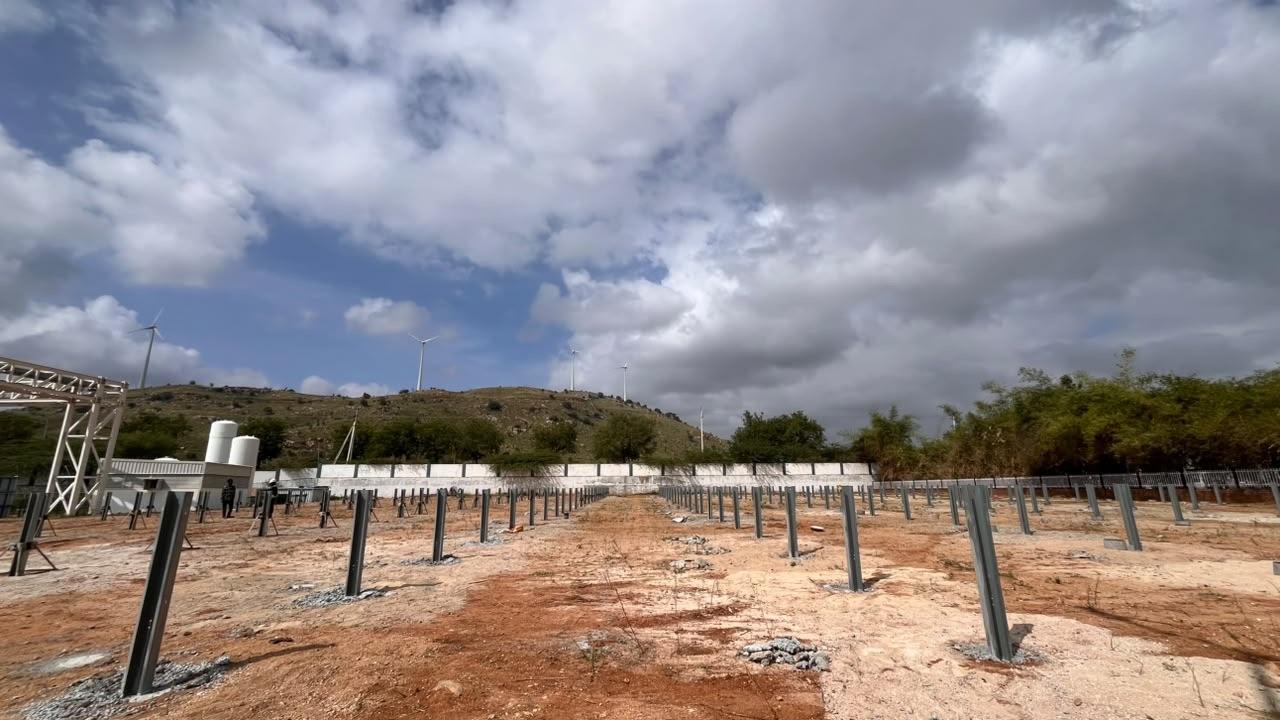
A solar plant your factory owns, on site or off-site
Plants from 10 kWp to 10 MW for factories in Andhra Pradesh, Telangana and Karnataka: on your roof, on your own land, or on land elsewhere with the power delivered through the grid. Neumile designs them, handles the approvals, builds them and maintains them.
Two ways to own a plant
Both are plants your factory owns. The difference is where the panels stand and how their power reaches your machines, and that decides which state rules apply.
| On your roof or land | Off-site, through the grid | |
|---|---|---|
| Where the panels go | On your roof or landOn the factory roof, or on ground-mounted structures on your own land. The power is used straight in the factory. | Off-site, through the gridOn land elsewhere in the state. The power reaches your factory through open access. |
| Who owns it | On your roof or landYour factory. | Off-site, through the gridYour factory, as a captive plant, or your factory with other owners, as a group captive plant. |
| Plant size | On your roof or land10 kWp to 10 MW, set by your daytime use, your space and the state's net-metering rules. | Off-site, through the gridSized for the part of your use that your own roof or land cannot cover. |
| Rules that decide it | On your roof or landThe state's limit on plant size and how surplus power is credited: net metering, net billing, gross metering or behind the meter. | Off-site, through the gridOpen access approval, the state's charges for carrying power over the grid, and its banking rules. |
| Price on this site | On your roof or landA first range from the calculator, then Neumile's quote after a site study. | Off-site, through the gridNo rupee figure, because grid charges differ by state and change during the year. Neumile's assessment of an off-site plant is free. |
| Calculate your savings | Ask for a free off-site assessment |
What Neumile handles, from study to maintenance
One contractor for the whole job, in the order the work happens.
- Step 1
Study and design
- Site analysis that finds the constraints which would change the project's cost
- Pre-feasibility study with a detailed project report
- Detailed engineering and design, to the grid code
- Step 2
Approvals
- The approvals the plant needs, and the liaison work to get them, as part of a turnkey contract
- Step 3
Supply and construction
- Complete procurement, with certified equipment from established suppliers
- Construction by a dedicated project team, with field quality checks and site safety practice
- Step 4
Maintenance
- Monitoring software that publishes live performance data
- Preventive, predictive and corrective maintenance
- Cleaning planned around the dust at the site, using dry methods that save water
- Thermal imaging, flash testing and third-party audits; warranty coordination with equipment makers
Rules and projects in your state
- Andhra Pradesh6 listed Neumile projects. 4 rules from the regulator's own documents, last checked 15 November 2026.
- TelanganaNo listed Neumile project yet. 6 rules from the regulator's own documents, last checked 15 November 2026.
- Karnataka2 listed Neumile projects. 7 rules from the regulator's own documents, last checked 15 November 2026.
Questions factory owners ask
What will a solar plant for my factory cost, and how long until it pays for itself?
For a plant on your roof or land, the calculator on this site gives a first range for the cost, the yearly saving and the payback period, worked out from your monthly units, your tariff and your space. Your actual price is in Neumile's quote, which follows a site study.
For an off-site plant this site gives no rupee figure, because the grid charges that decide it differ from state to state and change during the year. Neumile's assessment of an off-site plant is free.
Should my factory put the plant on the roof, on the ground, or off-site?
Start with your own site: a plant on the factory roof, or ground-mounted on your own land, feeds its power straight into the factory. If your site cannot hold a plant large enough for your use, an off-site plant that you own can supply the rest through the grid.
Neumile builds plants from 10 kWp to 10 MW, rooftop and ground-mounted, and its assessment of an off-site plant is free.
What size of plant suits my factory, and what if the roof is too small?
Three things set the size: how much power the factory uses in daylight hours, how much roof or land it has, and the state's net-metering rules. The calculator makes a first estimate from those, and the state pages list the limits confirmed from each regulator's documents.
If the roof is too small, a ground-mounted plant on your own land or an off-site plant can make up the difference.
Does my factory qualify for open access, and should the plant be captive or group captive?
In Andhra Pradesh and Telangana, a factory with a contracted demand or sanctioned load of 100 kW or more can take green power through open access, under each state's open access regulation of 2024. For Telangana, the regulation says 'there shall be no limit of supply of power for the captive consumers' (clause 9.2); Neumile confirms in the off-site assessment how this applies to your plant. For Karnataka, Neumile confirms the current open access rules in the assessment.
Which suits you, a captive plant of your own or a group captive plant shared with other owners, depends on how much power you need and whether you want to share ownership. Neumile's assessment of an off-site plant is free.
What happens to solar power my factory generates but does not use?
It goes into the grid, and what you get for it depends on the arrangement your state allows. Under net metering those units are set off against the units you draw; under net billing and gross metering they are paid for at a rate the state regulator sets.
The Karnataka page lists the rates its regulator set in August 2026 and the size limits for each arrangement.
Who handles the approvals with the distribution company?
On a turnkey contract, Neumile does: the contract covers design, buying the equipment, construction, and the approvals and liaison work.
Who maintains the plant once it is running?
Neumile offers operation and maintenance once the plant is built: live monitoring through software that publishes the plant's performance data; preventive, predictive and corrective maintenance; dry cleaning of the panels; thermal imaging, flash testing and third-party audits; and coordinating warranties with the equipment makers.
Solar terms explained
- Captive plant
- A power plant a factory owns and uses mainly for its own power, either on its premises or elsewhere. India's electricity rules set how much of it the factory must own and how much of its power it must use for it to count as captive.
- Group captive
- Several factories or businesses own one plant together and divide its power between them. Each member takes power from the shared plant as if it were its own captive plant.
- Open access
- Taking power from a plant built somewhere else, carried to your factory over the state grid. Green energy open access is the same arrangement for power from solar and other renewable plants.
- Banking
- Sending solar power your factory cannot use at once into the grid and drawing it back later, within limits and charges set by the state regulator.
- Net metering
- One meter records power in both directions, and the units your plant sends to the grid are set off against the units you draw from it.
- EPC (turnkey)
- Engineering, procurement and construction: one contractor designs the plant, buys the equipment and builds it. Turnkey means it does all of this from start to finish.
- O&M
- Operation and maintenance: running the plant day to day, monitoring it and keeping it in repair once it is built.
Estimate your saving from your monthly units and tariff
Free quote after a site study.